.jpg)
Seagrass
A film by
Meredith Hama-Brown
Seagrass is a fictional film and yet it is also deeply personal to me. The writing process began with some key memories in my life, but developed much beyond that, touching on a web of interweaving themes that matter to me. When setting out to write this project, I knew that I wanted to look at a particularly poignant time in my life. I was six years old when my parents were going through a divorce. During this time I remember developing many rigid routines and strong attachments to objects. Looking back at this time, I can see clearly as an adult that these behaviours were an outcome of the instability that I was feeling from the changes in our family’s life.Decades later, as an adult, I have also experienced a great deal of anxiety. Because of this relationship that I have to the emotion of fear, I knew that it would be central to Seagrass. From exploring questions relating to fear and security, I found a story that speaks to many themes. Seagrass is about a distressed family, motherhood, the deep bonds between sisters, irrational fears, grief, shame, intergenerational trauma and racial identity. It is about all these seemingly disparate things, but the thematic tissue that connects them all is “fear” and the various ways that uncertainty affects our relationships and sense of stability. One of the themes I’d like to speak to further is my exploration of racial identity in the film. I knew as I became more invested in the story that it would need to be something that I incorporated. As Judith struggles to find her identity as a mother, wife and woman, I knew her racial identity would be a large question for her as well. As a half-Japanese, half-white Canadian, I have often considered questions around my identity. So much of my Japanese Canadian family history and culture were not passed on to me. When I look at the root cause of this, I feel that it is a direct result of the incarceration of Japanese Canadians during WWII. My grandparents didn’t speak much about their experience to their children, I think because it caused them to feel shame. My mother and her six siblings grew up in the interior of British Columbia, in a predominantly white community; a place her family ended up residing because of her parents’ unjust displacement and the fracturing of the Japanese Canadian community in BC pre-war. Through Judith’s character, I am looking at some of the reasons why lineage and culture were lost in my family. I am also exploring through her crisis, the feelings of anger, shame, and longing that come along with losing touch with one’s own history. The film ends somewhat jarringly; each storyline isn’t perfectly resolved in a neat and conclusive way. I felt this was the most enriching and truthful ending for the film. It speaks to the many ways that the characters’ lives have been fragmented and instead of being able to fix these ruptures, the only answer is them to simply see the truth head on, at last.
Ally Maki, Luke Roberts, Nyha Breitkreuz, Remy Marthaller, Sarah Gadon, Chris Pang
DIRECTING: Meredith Hama-Brown
SCREENPLAY: Meredith Hama-Brown
PRODUCTION: Tyler Hagan (Experimental Forest Films), Sara Blake (Ceroma Films)
CINEMATOGRAPHY: Norm Li
SOUND: Oscar Vargas, Matt Drake
MUSIC: Oscar Vargas
EDITING : Kane Stewart, Shun Ando
%20-%20Max%20750%20kb_ENG.jpg)
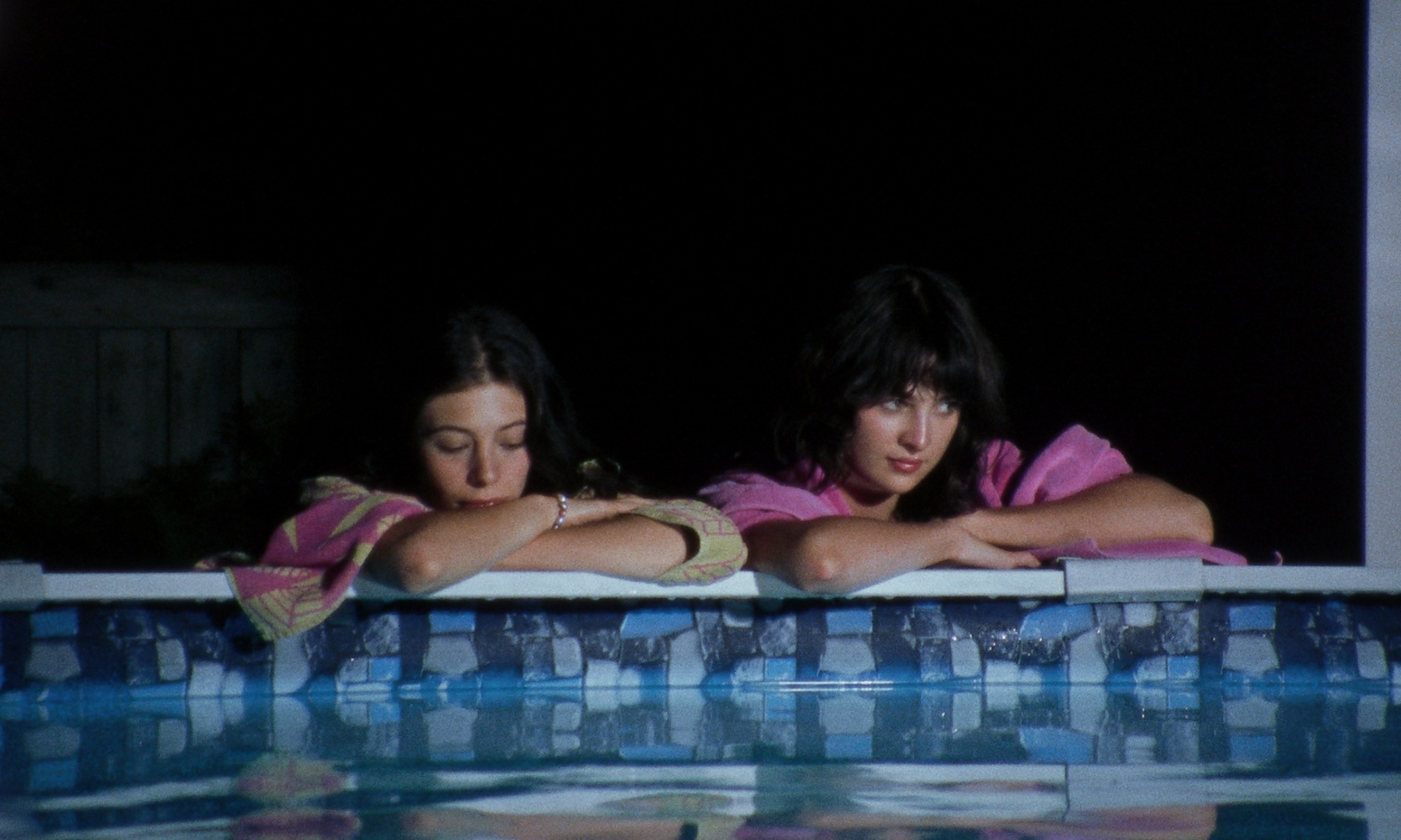
Desperate to find a deeper connection in her marriage after the recent death of her mother,Judith (Japanese Canadian) brings her family to a self-development retreat on a remote island.But when they befriend another interracial couple who seem to have the perfect marriage,Judith begins to recognize how irreparably fractured her relationship is. Meanwhile, their twodaughters are plunged into a destabilizing world under the constant stress of their parents’crumbling relationship. In the end, the family must collectively face their most unnervinginsecurities before they become permanently broken.
"A fascinating leap into the dark"
"Raw and emotional"
Seagrass | 2023
Loscil | 2023
Alaskan Tapes | 2019
Broken Bunny | 2018
Cosmic | 2020
Mind Mirror | 2018
Meredith Hama-Brown’s work has screened at various international film festivals including: Palm Springs Shortfest, Shnit, Fantastic Fest, and Fantasia. Her work has garnered several awards such as the $20,000 Sea to Sky Award at VIFF, a D&Ad Graphite Pencil and she has been nominated at the UKMVA’s and MVPA’s. In 2020 she was selected for the TIFF Filmmaker Lab and awarded the Canada Goose Fellowship for her upcoming feature film. Her projects have received BC Arts, Canada Arts Council and Telefilm funding. Her films have been selected for Vimeo Staff Picks and featured on Nowness Picks, Directors Library and Directors Notes.


_Amadou.jpg)
.jpg)
_Fragile.jpg)