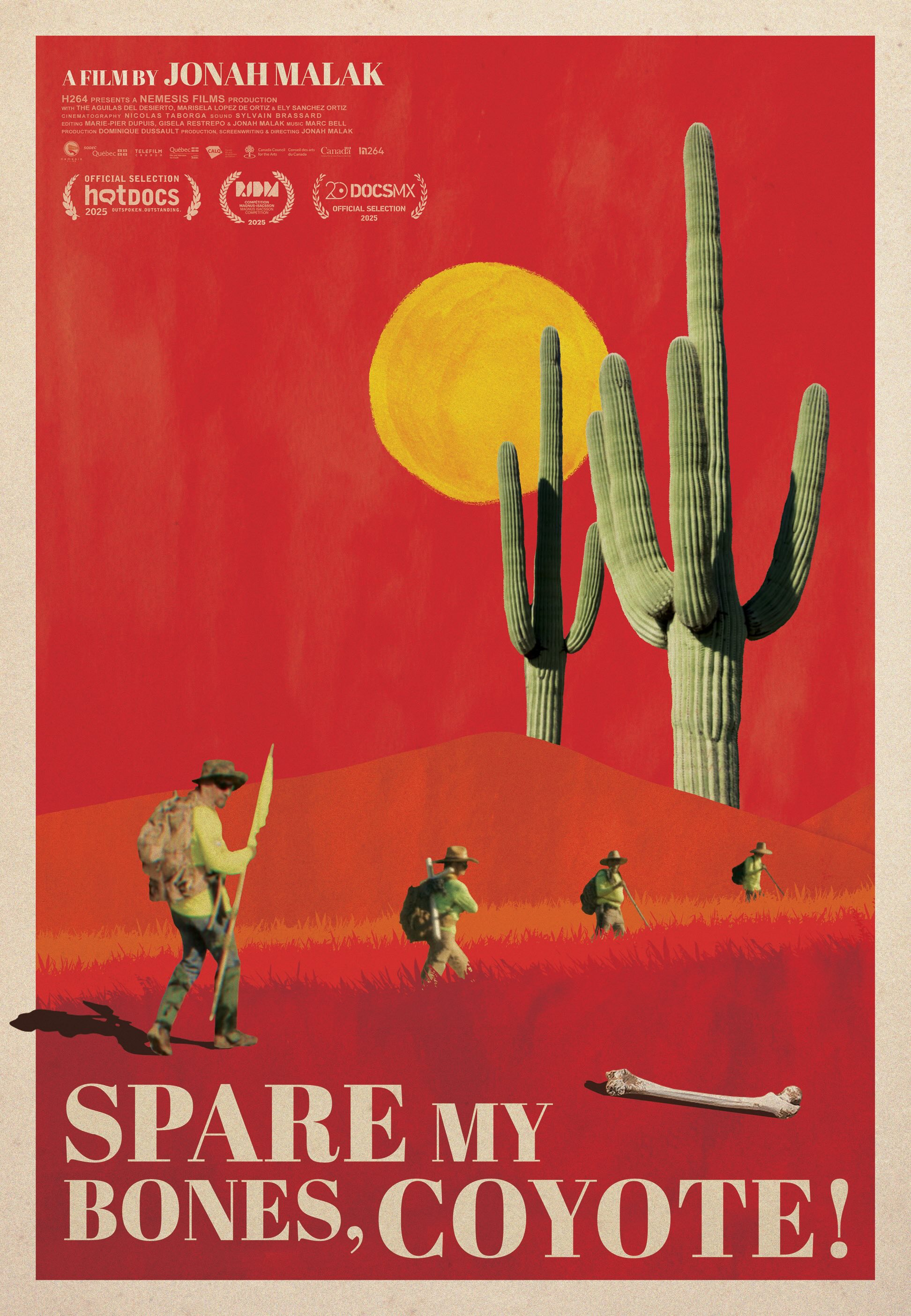
Spare My Bones, Coyote!
A film by
Jonah Malak
It is an undeniable truth that mass displacements will continue to intensify over the coming years—and with them, exile, distress, and social conflict. Both in subject and in form, Spare My Bones, Coyote! could not be more timely. Its very reason for being is urgency, and its mission is to communicate a forgotten truth and provide a counter-narrative to the prevailing media polarization.
Our film is a collaboration between the volunteers of The Águilas and our team, where each group’s efforts complement the other’s—logistically and ethically. The first time I met Ely, Marisela, The Águilas, and witnessed their work, it was immediately clear to me that their story needed to be told on the big screen, with the scale and depth it deserved. To that end, the team and I accompanied them on half a dozen outings over three years, capturing footage that would immerse the audience in the experience in real time. In return for our commitment, The Águilas granted us unprecedented access and treated us as one of their own.
Unlike borders drawn with straight lines and reinforced with towering walls and barriers, desert landscapes serve as borders by sheer force of nature—they are vast, hostile, and extremely dangerous. The contrast was striking between the rhythm of the search missions—intense, tense, expansive, where the desert takes on such presence it becomes a character in its own right—and the pace of everyday urban life—calm, slow, and constantly interrupted by distress calls and emergencies. I wanted the film’s editing to reflect these contradictions, and for the visual composition to elevate these landscapes to the status of full-fledged characters.
The presence of migrants on screen—through their videos and voices—had to be handled with unwavering care and ethical responsibility. For this reason, it was essential that the film crew be multicultural. I myself am Lebanese, from an Arab culture that is often demonized—and not just a little. Lebanon has seen its share of migration, both into and out of the country, depending on the civil wars that have plagued us. Still, I was caught off guard by the humanitarian disaster unfolding at the Mexico–US border—something I could never have imagined taking place between two countries technically at peace. Producer Dominique Dussault has made women’s representation her personal crusade—both on screen, with complex and meaningful characters, and behind the camera, through the diverse teams she assembles for her films. Director of photography Nicolas Taborga, of Bolivian origin, is personally affected by the film’s themes and the people portrayed. Editor Gisela Restrepo, originally from Colombia, has deep insight into issues of migration and political violence in Latin America. And Canadian editor Marie-Pier Dupuis masterfully amplified the tension in these contradictory situations to convey them to the widest possible audience.
Beyond partisan activism, what mattered to me, through Spare My Bones, Coyote!, was to portray with nuance the many tragedies of the humanitarian catastrophe that the Mexico–US border has become, and to explore the deep inner wounds caused by life-altering decisions over which those involved—whether migrants, volunteers, or participants—often have little to no control.
Ely Ortiz, Marisela Ortiz et les Águilas del Desierto
DIRECTING: Jonah Malak
SCREENPLAY: Jonah Malak
PRODUCTION: Dominique Dussault (Nemesis Films)
CINEMATOGRAPHY: Nicolas Taborga
SOUND DESING: Sylvain Brassard
EDITING: Marie-Pier Dupuis, Gisela Restrepo, Jonah Malak
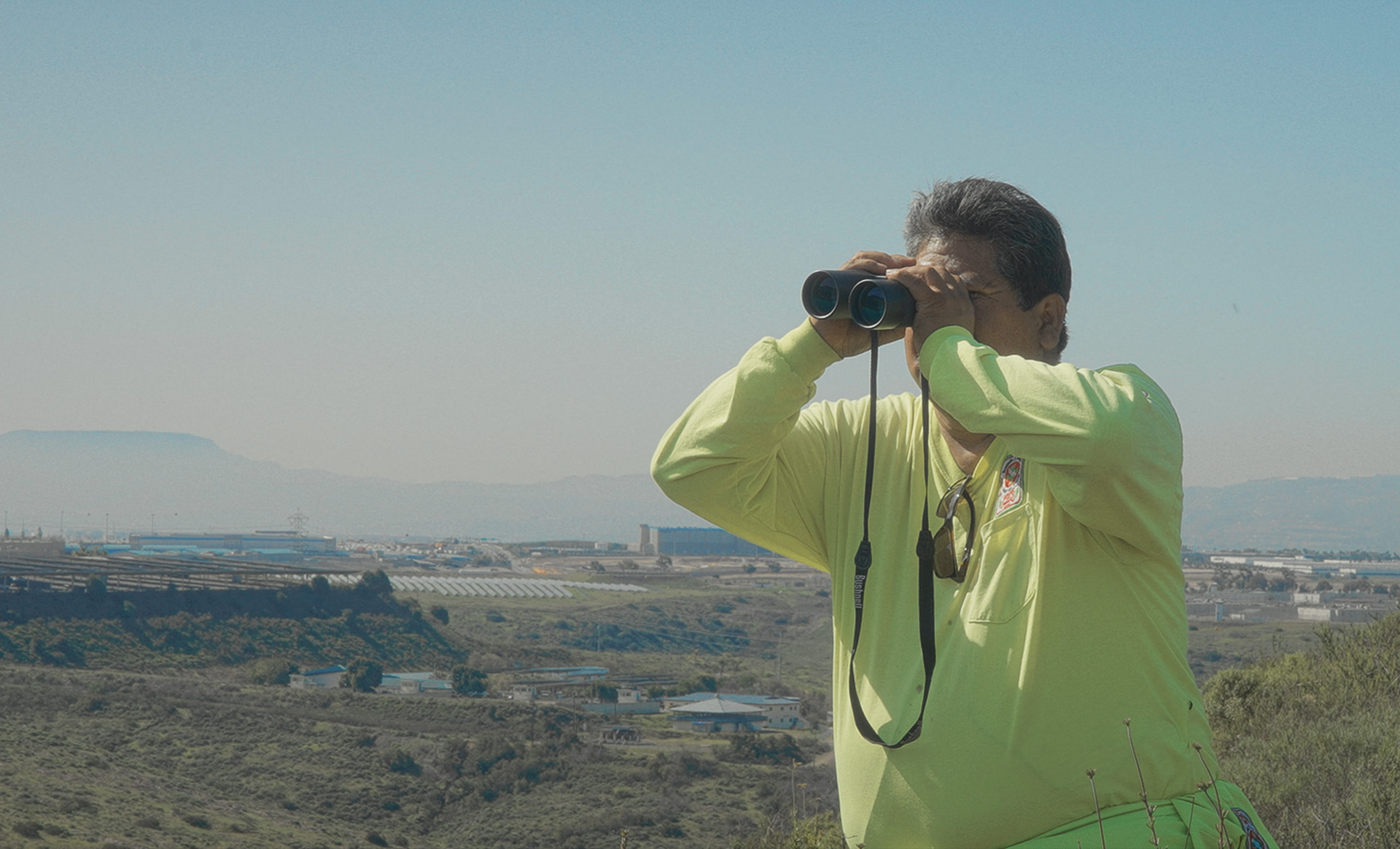
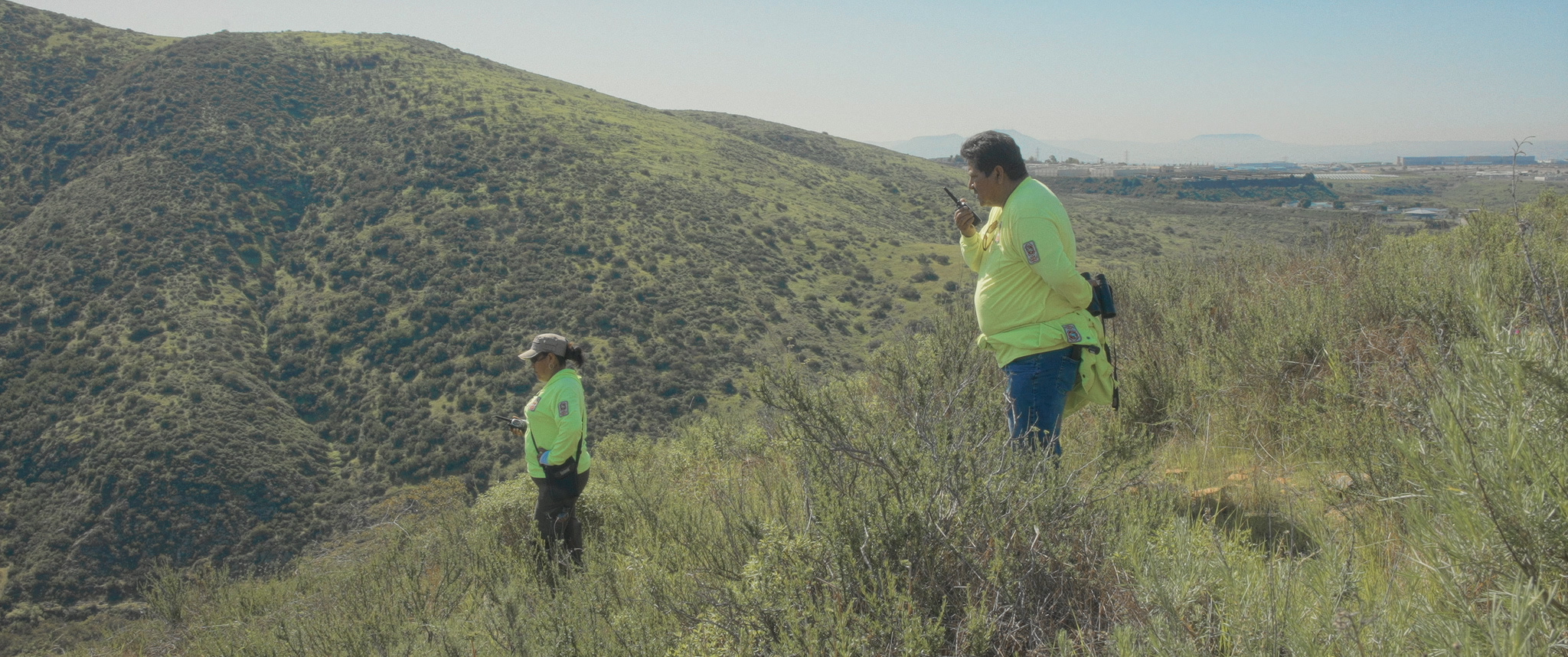
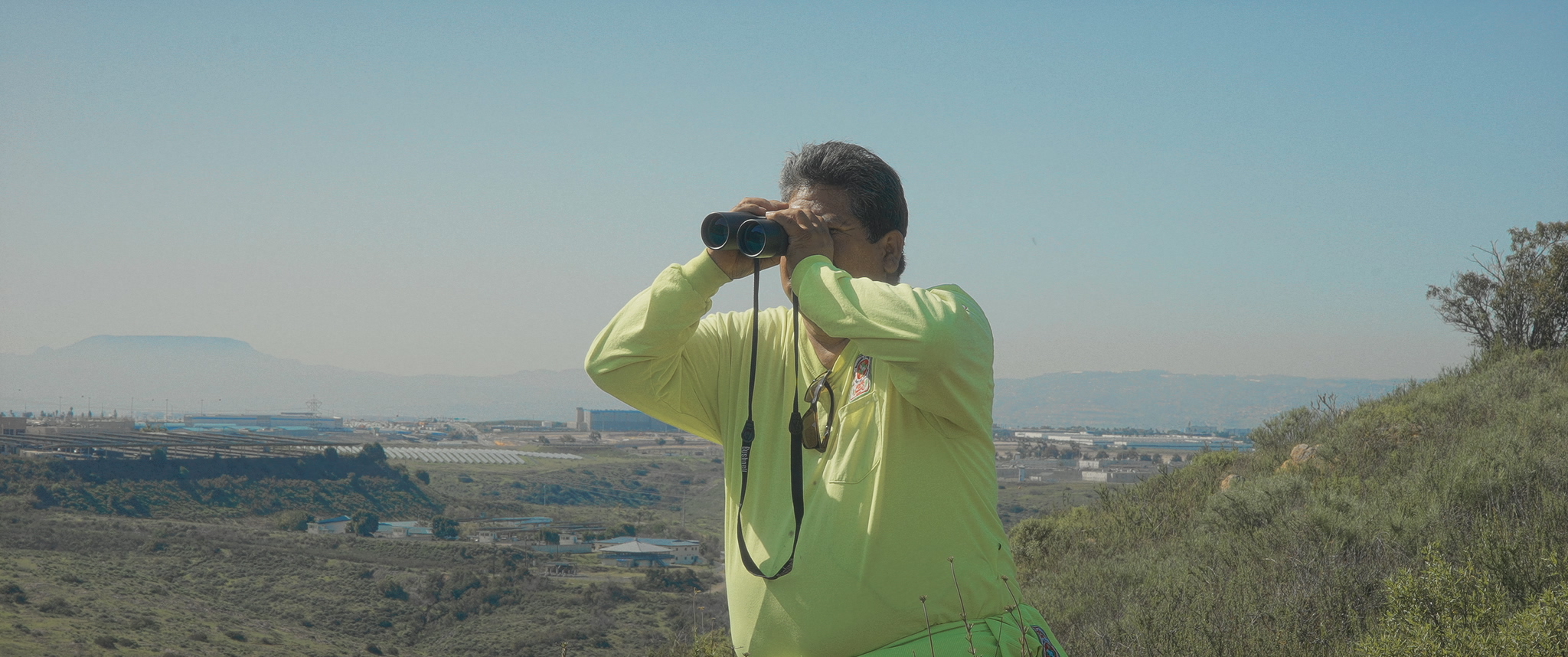
For the last twelve years, Marisela and Ely, along with the volunteer group The Águilas del Desierto have roamed the US-Mexico desert. Their goal: to seek, find and return to their families the bodies of migrants who died while crossing on foot. This all-consuming calling takes a crushing toll on them, but how could they stop? Spare My Bones, Coyote! follows their work, dedication, and difficult lives they have chosen to live.
★★★★ The border desert between Mexico and the United States tragically drains so many hopes. Spare My Bones, Coyote! takes on this humanitarian catastrophe without reducing it to a slogan; Jonah Malak brings it to life with an immediacy that feels as close as possible to the reality on the ground.
A theatre experience out of the ordinary.
The existence of such a film reminds us that we have not yet abandoned hope.


Spare My Bones, Coyote! | 2025
Dorchester : In the Midst of the Fray (Producer) | 2024
Dave Not Coming Back | 2020
My Tuesdays at Catherine’s | 2018
La K7 Migrante (Producer) | 2017
Mystic Mass | 2014
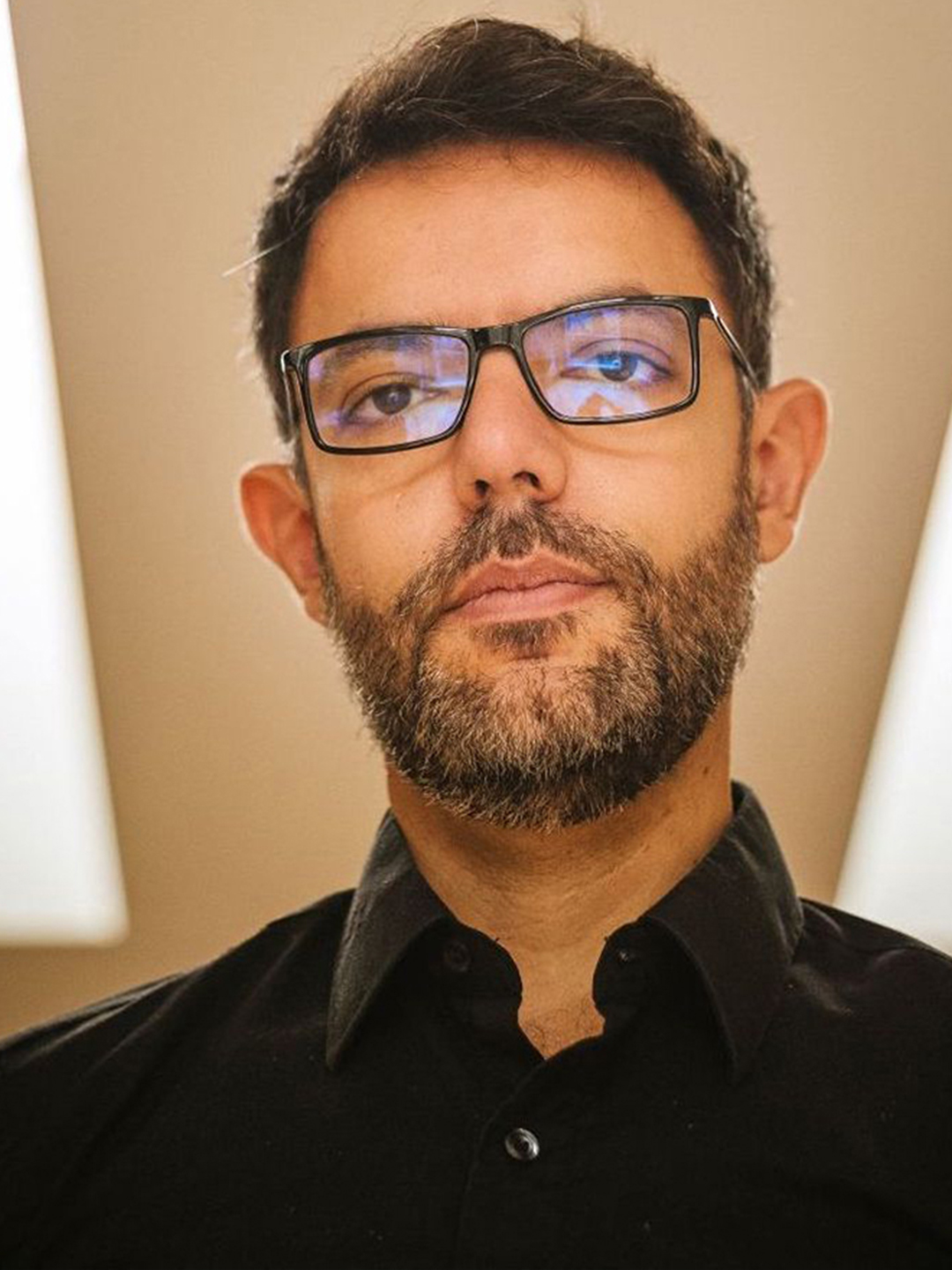
Jonah Malak, also known as Karim Haroun, is a documentary filmmaker and producer. After studying mathematics and cinema, he dedicated himself to the rewarding profession of documentary filmmaking. His works bridge various disciplines and cultures, including two feature films and several short films: Mystic Mass and My Tuesdays at Catherine’s, both anthropological documentaries exploring religious phenomena in Lebanon. His latest feature, Dave Not Coming Back, is a compelling story about cave diving shot in South Africa and Australia. The film is available on Amazon Prime and has garnered over 1.1 million views on YouTube. The film has received numerous accolades, including the Audience Award at the Austin Film Festival, a Canadian Cinema Editors Award for Best Editing, and a nomination for Best Editing at the Canadian Screen Awards.


_Amadou.jpg)
.jpg)
.jpg)