.jpeg)
Very Nice Day
A film by
Patrice Laliberté
Some projects move forward in a straight line, and then there’s Very Nice Day, made in a spirit of meandering and searching. The film arose from an impulse, driven by a desire to create something atypical, at the risk of creating something imperfect. Tired of the usual production schedules and not wanting to lose our creative spontaneity, we developed a basic screenplay, a canvas we could use to start shooting. We felt no obligation to follow it; instead we were trying to trigger accidents, keeping an eye out for lucky flukes.
Very Nice Day appropriates the neo-noir genre. It’s my way of examining our solitude, our personal and digital identity and our relationships with other people. I wanted to explore the underlying paranoia of online culture and derealization syndrome. Jérémie embodies that social disorder. His perception of the world is coloured by the idea that reality doesn’t exist, like a fantasy of being Neo in The Matrix (1999) or Truman in The Truman Show (1998). At the same time, we discover the loneliness that plagues Élyane, a professional Instagrammer with thousands of followers. We notice the contrast between the way she presents herself online and the loneliness of her everyday life.
That free creative approach immediately gave rise to the idea of using a cellphone camera to make the film. Aside from its technical flexibility and the fact that we always have a camera in our pockets, the phone became an essential, central part of the screenwriting approach. In the way we conceived our directing method, it becomes an extension of a person. Throughout the story, Jérémie (Guillaume Laurin) and Élyane (Sarah-Jeanne Labrosse) have one glued to their hands as a kind of technological extension of themselves, with their eyes constantly riveted to the screen. As we put the film together, we wanted to maximize its use. Right from the beginning, I could picture characters moving around in a crowd or in the Metro and us tracking them without attracting attention. Those are the staging ideas that built the screenplay as the shoot went along.
There were usually between two and seven people on the shoot. Since there were so few of us, an atmosphere of collective creation arose, with the same feeling as when I played with my punk band in high school or made my first films with my friends from CEGEP.
Guillaume Laurin, Sarah-Jeanne Labrosse, Marc-André Grondin, Marc Beaupré, Christine Beaulieu, Mathieu Dufresne, Sandrine Brisson
DIRECTING: Patrice Laliberté
SCREENPLAY: Nicolas Krief, Guillaume Laurin, Patrice Laliberté, Geneviève Beaupré
PRODUCTION: Julie Groleau, Fanny Forest (Couronne Nord)
CINEMATOGRAPHY: Christophe Dalpé
SOUND: Ilyaa Ghafouri
MUSIC: Marc-Antoine Barbier
EDITING: François Lamarche
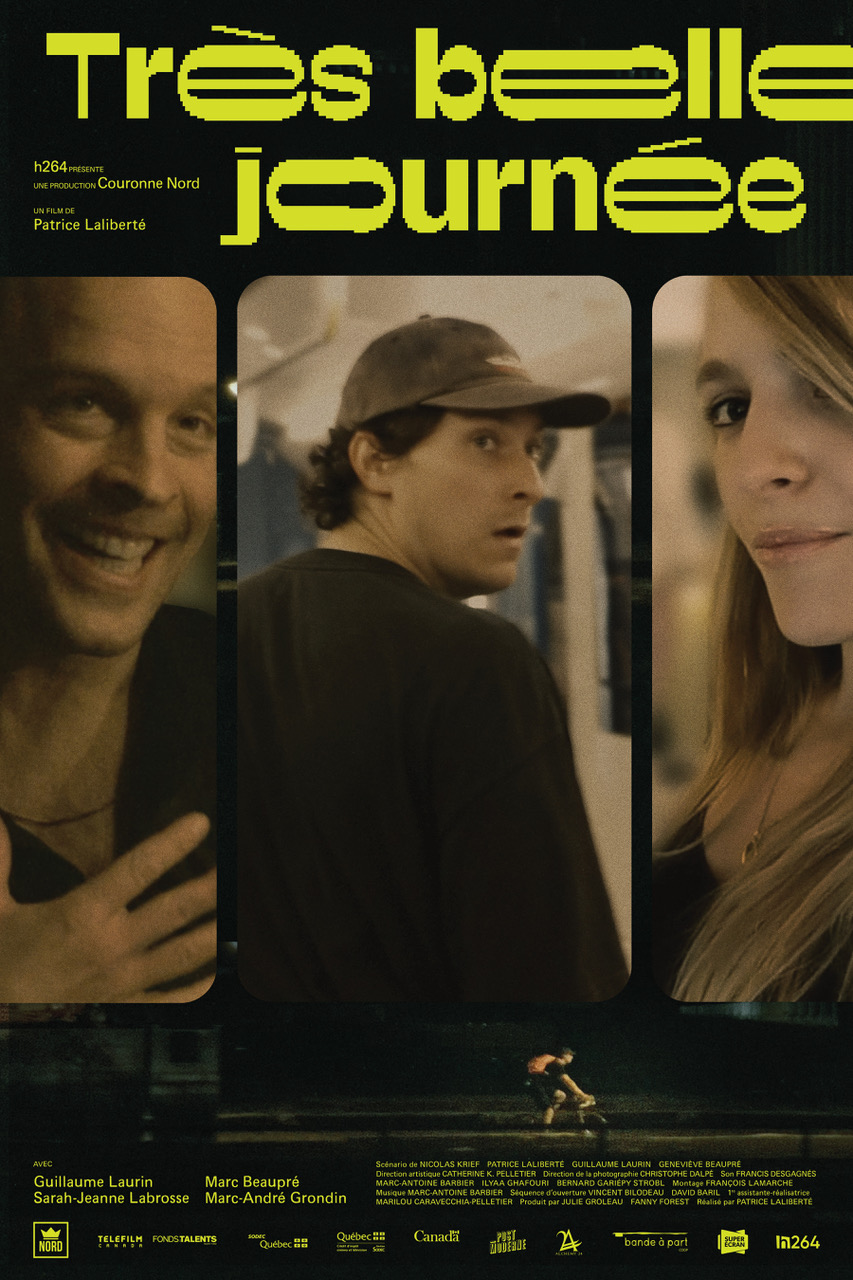
Jérémie (Guillaume Laurin), bicycle courier, crisscrosses the city at full speed; he delivers anonymous backpacks, blindly following the instructions of his boss Dom (Marc Beaupré). Lonely, Jérémie records a podcast in which he shares his conspiratorial view of the world. His daily life is turned upside down by the arrival of a new neighbor, Élyane Boisjoly (Sarah-Jeanne Labrosse), a famous instagrammer for whom he develops a fascination. His life is turned upside down when one night his obsession with Élyane disturbs him to the point of making him miss a delivery. In a violent manhunt orchestrated by Dom, Jeremy has no choice but to act.
★★★★ "Brillant"


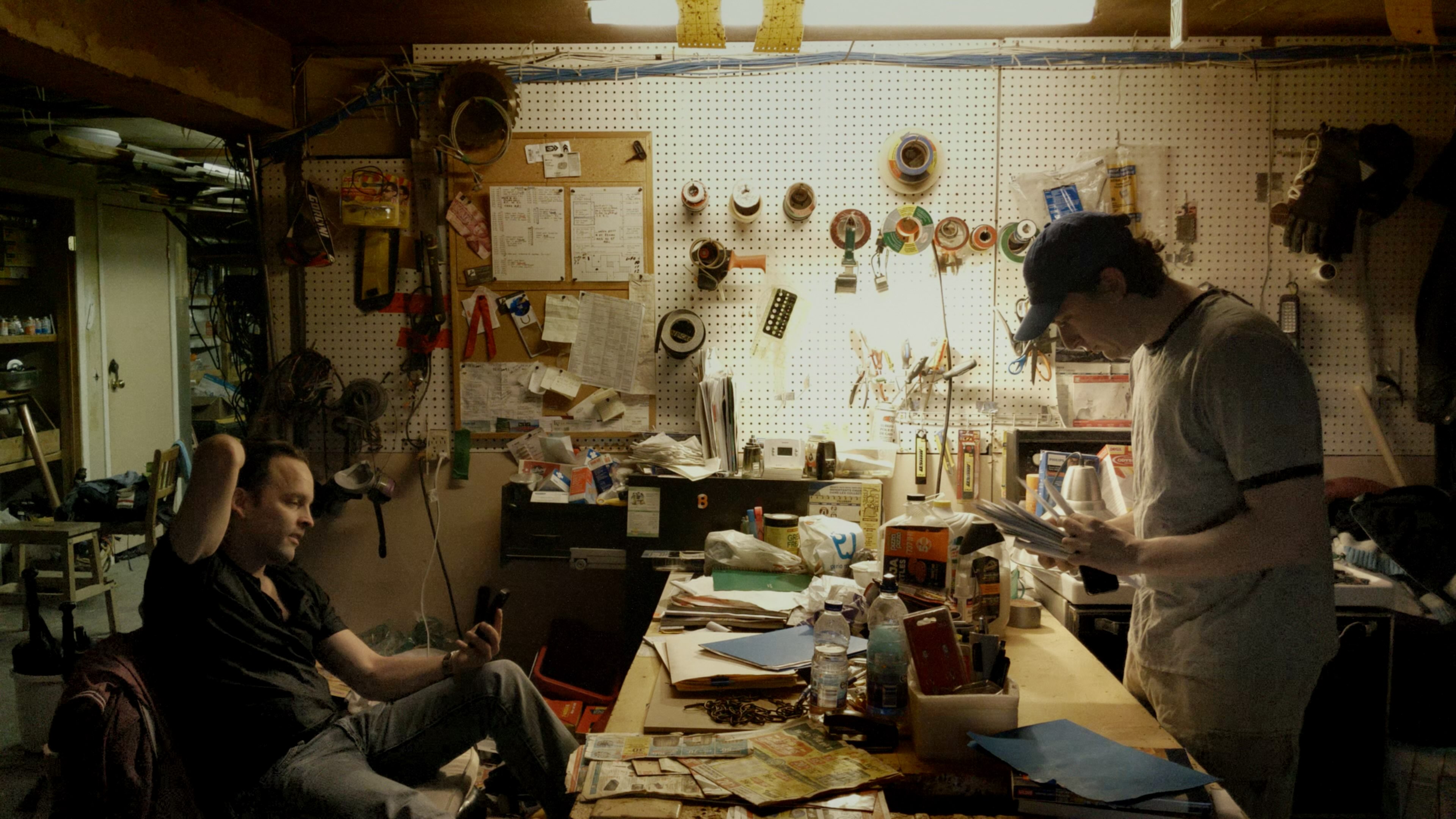

Very Nice Day I 2022
The Decline I 2020
Late Night Drama I 2016
Overpass I 2015
The engine cycle I 2014
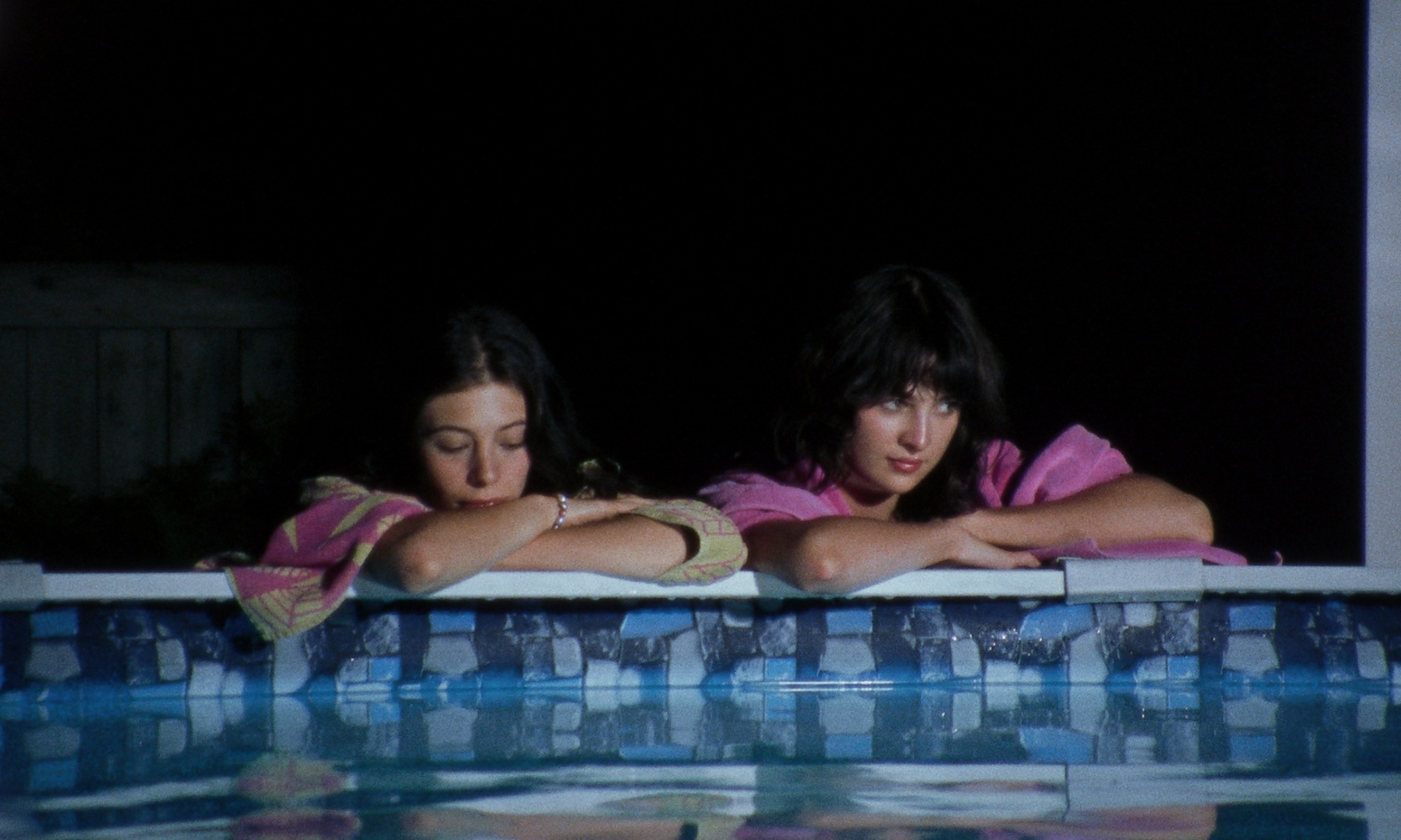
In 2012, screenwriter and director Patrice Laliberté cofounds Couronne Nord, the production company through which he will give life to his owns short films: Le cycle des moteurs (nominated at the 2016 Québec Cinéma Gala), Drame de fin de soirée (TIFF 2016), and Viaduc, which received the TIFF’s 2015 Short Cut Award for Best Canadian Short Cut, in addition to being acclaimed in more than 75 festivals worldwide. In 2016, he cowrites and directs Game(r), a web series with more than 2 million views on Facebook. In 2020, in addition to launching the second season Game(r), he released The decline, the very first Netflix-funded Quebec feature film.


_Amadou.jpg)
.jpg)